
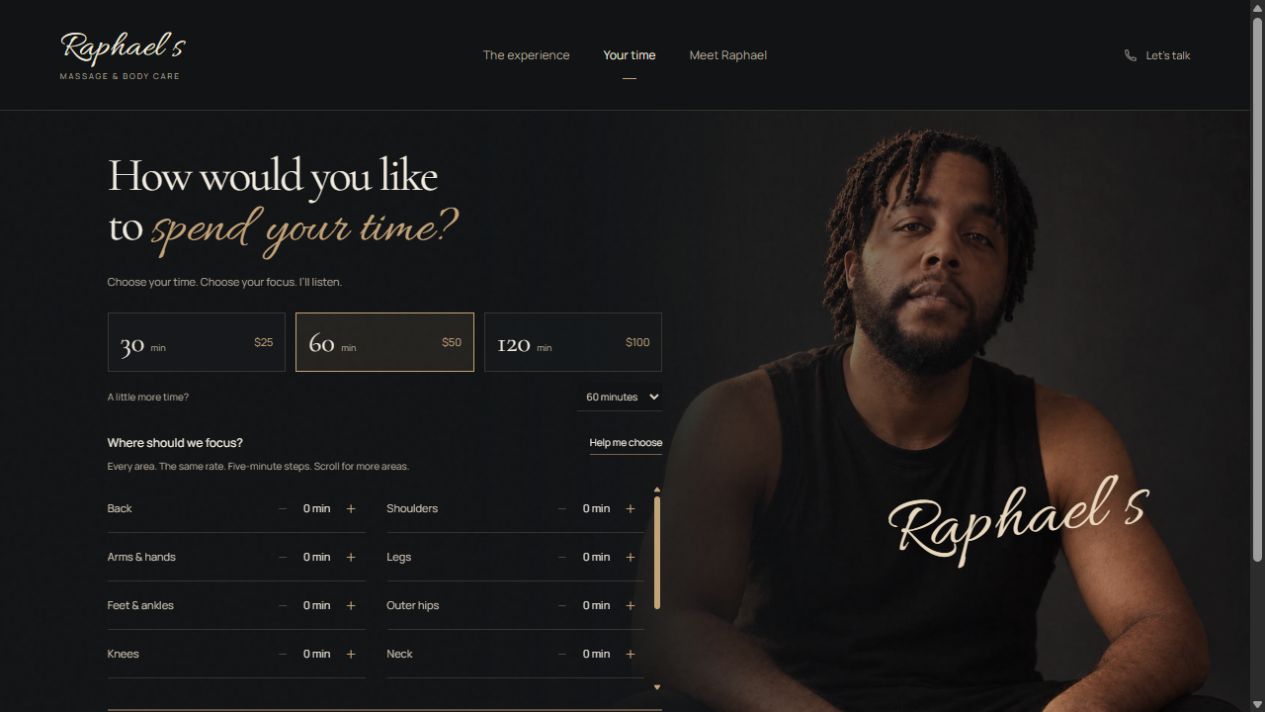
When someone asks me how to choose a web designer, I suggest opening a real project and following it as a customer. The homepage is the introduction. The more useful question is what happens when you try to call, ask for a quote, compare a service or send an inquiry.
Start with the job your website needs to do
Before comparing proposals, write one sentence about the result you want a visitor to reach. A Banning service business might need a clear request for an estimate. A Redlands consultant might need qualified meeting requests. A Riverside staffing agency may need both job applications and employer inquiries, with different forms for each audience.
That sentence helps separate necessary work from attractive extras. It gives web designers something specific to plan around and gives you a practical way to review the finished website.
Bring the designer a few examples of real customer questions. Which services do people misunderstand? What information is usually missing from an inquiry? Which questions does your team answer repeatedly? The answers often reveal the pages and features that matter most.
Ask for live work and follow its main action
A portfolio should help you understand how a designer thinks. Look beyond the first image. Open the navigation, follow a prominent button, read the service explanation and inspect the form labels. You do not need to send a test inquiry to learn whether the journey is understandable.
For example, on Raphael’s Massage & Body Care, the opening invitation leads to an experience builder, a review step and a request form. The request form explains that the preferred time needs confirmation. That connection between promise, choice and expectation is something you can examine for yourself.
Ask what the designer personally contributed and whether a project is a live client engagement, a demonstration or an independent concept. Those are all useful kinds of work when they are described accurately. A polished example does not automatically prove increased sales.
Get a proposal that names the deliverables
A useful web design proposal should identify the pages, supplied content, required features, revision rounds and launch responsibilities. “A modern website” leaves too many decisions unresolved. “Five approved pages, an inquiry form, mobile layouts and an editing handoff” gives both sides something concrete to evaluate.
- Content: Who writes the copy and supplies approved photographs?
- Functionality: Is a booking button linking to an existing service, or is a new booking system being built?
- Editing: Which text, images and records can your team update?
- Testing: Which important journeys and screen sizes will be checked?
- Support: What happens after launch, and what costs recur?
A custom CRM, staff portal or document workflow can turn a website project into a software project. That may be the right investment, but it deserves its own requirements and estimate.
Know what you will control after launch
Ask whose account holds the domain, where the site is hosted and how you will receive access. Understand which parts depend on subscriptions, paid plugins or third-party platforms. Establish how content and business records can be exported if your needs change.
For business owners in Beaumont, Yucaipa or elsewhere in the Inland Empire, these practical questions matter just as much as visual style. A useful handoff should show how to change important information, how to recognize a failed form submission and whom to contact for maintenance.
Different platforms offer different levels of portability and control. The right choice depends on your team’s editing needs, budget and future plans. A designer should be able to explain that tradeoff in ordinary language.
Discuss SEO as continuing work
Good web design can support search visibility through useful service content, descriptive titles, crawlable navigation and an understandable site structure. It cannot promise a particular ranking simply because a new design has launched.
Ask how your designer will connect the site to Search Console, make important pages discoverable and measure useful actions. Google’s guidance emphasizes helpful, reliable content created for people. For a local business, that means answering real service questions with accurate details and relevant examples.
My approach at The Data Architect brings the public website and the work behind it into the same conversation. We can begin with web design and, where the business needs it, plan custom business software around the next step. Tell me what your website needs to accomplish, and we can define a scope you can actually review.